Tap to Authenticate: NFC YubiKeys on Linux

Tap a YubiKey against your phone and the login just happens. Rest it on an NFC reader next to your Linux desktop and nothing happens at all: browsers on Linux only talk to security keys over USB, so the reader may as well not be plugged in. One small daemon closes that gap. Here’s how token2-fido-bridge works, the hardware on my desk, and the AUR package I published that makes the whole setup two commands on Arch.
Papirus XApp Symbolic Icons
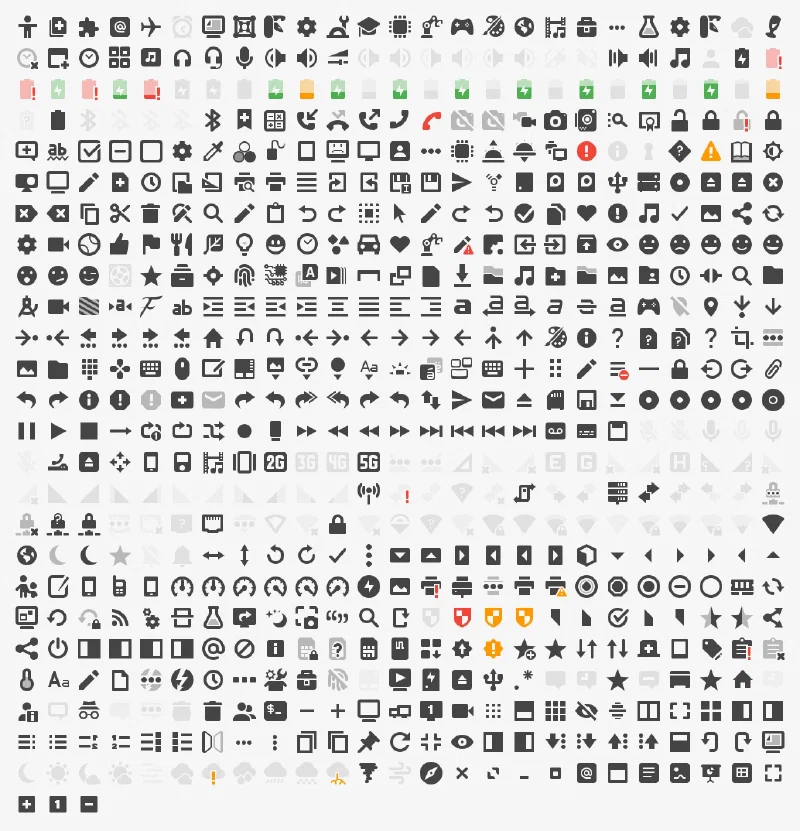
Papirus XApp Symbolic Icons is out: a drop-in set that gives the xsi-* icon names used by Linux Mint, Cinnamon, and the XApp projects proper Papirus artwork. Upstream draws its own Adwaita-derived versions and installs them into hicolor, so on a Papirus desktop every app asking for one of those names gets an icon that matches nothing around it. The set covers 628 of the 666 names, at 16, 22, and 24 pixels where upstream draws only 16, and installs into the Papirus theme so xsi-* lookups resolve there first. Nothing is hand-drawn: the whole set is generated from the Papirus and XSI sources, with no fuzzy matching anywhere.
Tiler: Grid Tiling for Cinnamon
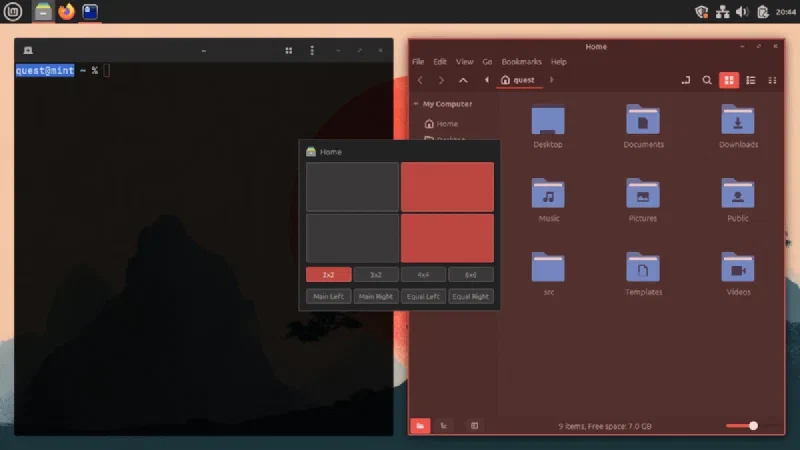
Tiler is here: a grid-based window tiling extension for Cinnamon, built for anyone who wants flexible tiling without switching to a tiling window manager. It brings grid placement on a hotkey, multiple grids, gaps between windows, reserved screen space for docks and Conky setups, and one-press auto-tiling for the whole workspace, all working with the mouse or entirely from the keyboard. I wrote it from scratch, inspired by gTile, because the existing solutions never suited my needs.
Open Source Funding: A pump.fun Experiment

Open source funding is still unsolved. I have tried plenty of the fixes, and the tip button on my GitHub profile has earned exactly one dollar in eleven months. So when a cold email offered to sponsor s, my terminal search tool, I said yes - not because I need the money, but to see whether this was something the wider ecosystem could use. I had never used pump.fun and I am not a fan of memecoins, which is exactly why I treated it as an experiment. They launched a coin with my project’s name on it, set me up to collect a cut of the trading fees, and roughly $11,000 arrived inside a day. It also produced zero pull requests, zero code suggestions, and not one person willing to test the Android build of my game. This is the whole story, good, bad and ugly.
Saturating 10 Gigabit on Linux

Wringing full speed out of a network used to be a niche pursuit, the stuff of 10G home labs and datacenter transfers. That’s changing fast. Multi-gig fiber is landing in homes everywhere, even Hawaiian Telecom is selling 3 Gig out here on the Big Island. A fast link is no longer just the wire between your own machines; it’s the wire to the internet too. And Linux still ships network defaults sized for a slower era, so on a fast link, especially a long one, they leave throughput unused. Here’s the sysctl set I run, what each knob does and where it actually matters, and the single-stream iperf3 result over 20 feet of in-wall Cat 5e: 9.75 Gbit/s.